Selling Guide
How to Sell Your House Fast in East Anglia: The Complete 2026 Guide
Next Day Offer Team12 min read

If you have typed “sell my house fast East Anglia” into a search bar, there is usually a reason behind it. A buyer has pulled out. A probate clock is ticking. A tenant has left and the house has been sitting empty. Or you simply need to be somewhere else by a certain date and a seven-month sale does not fit.
The good news is that you have more than one way to sell a house fast in Norfolk, Suffolk and Cambridgeshire. The less comfortable news is that every route trades something for speed, and not all of them are honest about it. This guide walks through each option, what it really costs, how long it really takes, and when the slower route is actually the smarter one. We are Next Day Offer, a small team that buys homes across the region, so we have a view. We will tell you where we fit and where we do not.
In this guide
- What “fast” really means when you sell a house
- Your five routes to a quick house sale in East Anglia
- How long a normal sale takes in 2026
- What each route leaves you with: a worked example
- How a property buying company works
- When an estate agent is the better choice
- Situations where a fast sale makes sense
- East Anglia: what is different locally
- Seven steps to sell your home fast
- How to check any buyer before you sign
- Frequently asked questions
What does “fast” really mean when you sell a house?
People use the word loosely, and it causes a lot of disappointment. There are actually three different clocks running in any sale.
The offer clock. How long until someone puts a firm price in front of you. With an estate agent that is whenever a buyer turns up. With a property buying company it can be a day.
The agreement clock. How long until you and the buyer have a deal you can both rely on. This is where many sales wobble, because in England and Wales neither side is bound until contracts are exchanged.
The completion clock. How long until the money is in your account and the keys change hands. This is the one that matters if you have a date to hit.
When a company promises to help you sell your house fast, ask which clock they mean. A written offer the next working day is quick. Completion in 14 days is quick. “We will list it tomorrow” is not quick at all, whatever the headline says.
Your five routes to a quick house sale in East Anglia
Here is the honest comparison, route by route.
1. Estate agent, priced to sell
The traditional route, and often the one that gets the highest price. Pricing slightly under the going rate can speed things up, but you are still depending on a buyer, their mortgage, their survey and everyone above and below them in a chain. You also pay the agent’s fee and your own conveyancing.
Best for: a home in good order, a seller who can wait, and someone for whom the top price matters most.
2. Auction
Auction gives a fixed date, and the buyer usually has to complete within about 28 days of the hammer falling. The catch is that you pay to enter the lot, you may need a reserve, and the result depends on who turns up on the day. Properties with problems often do well at auction. Ordinary family homes sometimes do not.
Best for: unusual or run-down properties where a guide price is hard to set.
3. Selling privately or through an online agent
Lower fees, but you take on more of the work: photos, viewings, negotiating and chasing. It does not remove the chain, the mortgage dependency or the risk of a collapse.
Best for: confident sellers with time and a property that will sell easily anyway.
4. A property buying company
This is the route we offer. The buyer deals directly with you, so there is no listing, no viewings and no chain. The trade-off is price: a reputable buyer offers less than the open market would, and tells you so up front. In return you get a firm figure and a completion date that suits you.
Best for: sellers for whom certainty, speed or condition matter more than the last few thousand pounds.
5. A sale to family or a friend
Can be quick and friendly, but it needs proper legal advice on both sides, an independent valuation, and a clear understanding of tax and, where relevant, benefits implications.
Best for: the rare situation where there is already a willing, funded buyer in the family.
| Route | Typical speed to completion | Price | Certainty |
|---|---|---|---|
| Estate agent | Around 7 months on average nationally | Highest | Lower, about 1 in 4 sales falls through |
| Auction | Often about 28 days after the sale | Varies | High once the hammer falls |
| Private or online agent | Similar to an agent, or slower | High | Lower |
| Property buying company | From 14 days, or on your date | Below market value | High once exchanged |
| Family sale | Can be quick | Agreed between you | Depends on funding |
How long does a normal sale take in 2026?
Before you decide a fast sale is worth any discount, it helps to know what the normal timeline looks like.
Figures from Rightmove (July 2026) put the average at 62 days to find a buyer, then a further 154 days to get from sale agreed to completion. That is 216 days in all, or roughly seven months. Almost two thirds of that time passes after you have already accepted an offer, which is the stretch where surveys, mortgage approvals and chain problems do their damage.
And not every agreed sale gets there. TwentyCi reports that 23.4% of agreed sales fell through in 2026 so far, after 24.4% in 2025. If you are counting on the money for a house purchase of your own, a one-in-four chance of starting again is a real risk, not a footnote.
That is the core reason people look for a fast house sale in East Anglia: not impatience, but the wish to remove the unknowns.
What does each route leave you with? A worked example
Speed is only half of the story. The other half is what is in your account at the end.
Take a home an estate agent has valued at £180,000. We have used the same sourced figures that sit on our What we pay page, so you can check them yourself and put in your own numbers. This example assumes the property is empty while it sells.
| What happens | Estate agent | Next Day Offer |
|---|---|---|
| Time to sell | About 7 months | 14 days, or your date |
| Asking price | £180,000 | No advertising |
| Sale agreed at | £162,000 (buyers often negotiate about 10% off asking) | £144,000 written offer |
| After agent’s fee | £158,112 (2% plus VAT is £3,888) | £144,000, no fees or commission |
| After your legal fees | £156,112 (about £2,000) | £144,000, we pay your legal fees when you use our partner solicitor |
| After council tax on an empty home | £154,712 (about £1,400 over 7 months) | £144,000, a few days of bills only |
| If the sale falls through | About 1 in 4 do | It cannot once we exchange |
| What you walk away with | £154,712 after about 7 months, if the sale holds | £144,000 in 14 days, or on your date |
The gap in this example is £10,712. Spread over the seven months an agent sale would typically take, that is about £1,530 a month. Whether paying that for a firm date, no viewings and no chain is worth it depends entirely on your circumstances, and we would rather you made that call with the numbers in front of you.
A few notes on where the figures come from. The Zoopla gap between asking and agreed prices peaked at 5.5% in 2023, but buyers push harder on empty or run-down homes, so we allow for 10%. HomeOwners Alliance (2026) puts the average agent fee at 1.42% including VAT, though agents can charge 2% plus VAT. A seller’s conveyancing usually runs £1,000 to £1,500 and can reach £2,000 once searches and a leasehold pack are added. The average Band D council tax in England is £2,392 for 2026/27, about £200 a month.
This is an illustration, not an offer. Your numbers will differ.
How does a property buying company work?
The process is simpler than most people expect, and it is worth knowing before you speak to anyone. If you want the full detail, our How it works page covers every step including the paperwork. In short:
- You tell us about the property. A postcode, a few questions and how quickly you want to move. It takes about three minutes online.
- We call you back within one working day, in a morning, afternoon or early evening slot you choose. The person who would actually buy your home makes the call.
- A written offer arrives the next working day. A firm price, your completion date, and a letter you can show your solicitor.
- Exchange, then complete on your date. A deposit is paid to you on exchange, and completion follows on the date in the contract, from 14 days or months ahead if you need the time.
Two ways of buying, and why we tell you which
The phrase “cash buyer” gets stretched in this market, so we are specific. We buy in one of two ways and tell you which applies before you accept.
- With our own funds. We buy the property outright and can complete in as little as 14 days.
- Exchange with a deposit paid to you. We exchange contracts, pay you a deposit that you keep if we fail to complete, and arrange our own onward sale before the completion date. Same price, same date.
Either way, the price and date in your offer letter are the ones you get, and the offer does not drop later unless a survey or legal check turns up something material that neither of us knew about. If that happens, we show you the evidence and you can walk away at no cost.
The honest bit about price
Our offers are below what an estate agent would ask. How far below depends on the property, the area, its condition and how fast you want to complete, and the letter shows what we allowed for. We say this on the first call, and you will find it at the foot of our site too, because a buyer who hides the discount is a buyer to avoid.
When an estate agent is the better choice
It would be strange to write a guide to selling your home and pretend one route suits everyone. Here is when we would tell you to list with an agent instead:
- The house is in good order and in a popular street, so it will sell quickly anyway.
- You have six months or more and no pressure on the money.
- The highest possible price matters more to you than certainty.
- You are not tied to a particular completion date.
If we think an agent is the better choice for you, we say so on the first call. That is not modesty. A seller who regrets the price is not good for anyone, us included.
Situations where a fast sale makes sense
People rarely choose a quick sale for fun. These are the situations we see most, and each has a page that goes into detail.
- A chain has broken. Your buyer has dropped out and your own purchase is at risk. See chain break.
- You have inherited a property. A sale that fits around probate with no pressure to clear the house. See inherited homes.
- The property is empty. Council tax, insurance and worry on a home nobody lives in. See empty property.
- You are a landlord with tenants in. Selling with tenants in place, with no notices and no void period. See tenanted property.
- You are behind on the mortgage. A fixed date before things get worse. If this is you, please speak to your lender and a free debt adviser as well. See mortgage arrears.
- You are separating. One clean sale and one date. See separation or divorce.
- The property has problems. Damp, subsidence, a short lease or non-standard construction. See problem property.
- You are downsizing or planning for care. Money released on a date that suits the move. See downsizing or care.
- You are relocating for work. See relocating.
Selling in East Anglia: what is different locally
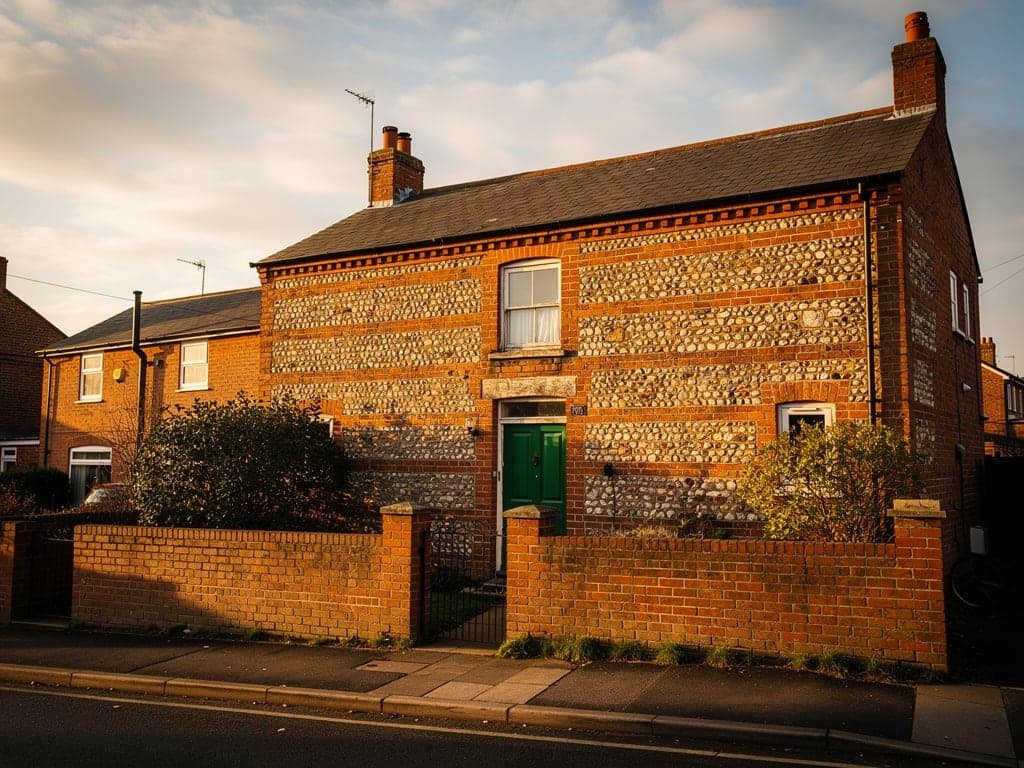
East Anglia is not one market. A flint-fronted terrace in Norwich, a seaside home in Great Yarmouth and a Victorian terrace in Cambridge behave very differently, and so do their buyers.
In Norfolk, we buy in Norwich, Great Yarmouth, King’s Lynn and Thetford. Older and non-standard properties are common, and these can be harder to sell through the usual mortgage route.
In Suffolk, we cover Ipswich, Lowestoft, Bury St Edmunds and Felixstowe. Village and period homes can take longer to find the right buyer.
In Cambridgeshire, we cover Cambridge, Peterborough, Ely and Wisbech. Demand is stronger in some pockets, which is exactly where an agent may beat us on price.
You can see every town and check your postcode on our Areas we cover page.
Seven steps to sell your home fast
Whichever route you pick, these steps will save you time.
- Decide what “fast” means for you. An offer this week? Completion by a fixed date? Write the date down.
- Get a realistic value. Check recent sold prices nearby, not just asking prices. Ask two agents if you can.
- Gather your paperwork early. Proof of ID, title details, any guarantees, the EPC, and for leasehold the management pack. Delays here slow everything.
- Choose a solicitor before you need one, and ask for a written fee quote.
- Compare at least two routes in writing. An agent’s valuation and a buyer’s written offer, side by side.
- Read every figure. What comes off the price, who pays what, and when.
- Take your time on the paperwork, even if the sale is fast. Any decent buyer will give you the room to read it.
How to check any buyer before you sign
This applies to us as much as anyone. Before selling to a property buying company, look them up on Companies House, read reviews and ask how the price is worked out. Check whether they charge fees, ask for exclusivity or tie you in, and make sure you can use your own solicitor and see proof of funds.
We set out eight checks, and our own answer to each one, in our guide How to check a property buying company. We are a new company, and we say so, so we do not show badges or star ratings we have not earned yet.
Already holding an offer from someone else? Send it to us and we will talk you through it in plain English, free and with no obligation. If their offer is better than ours, we will tell you. Start with a second opinion.
Frequently asked questions
How can I sell my house fast in East Anglia?
The quickest routes are a property buying company, which can give a written offer the next working day and complete in as little as 14 days, or an auction, which often completes about 28 days after the sale. An estate agent sale takes about seven months on average, so it is rarely the fastest option.
Is a quick house sale always cheaper?
Usually the headline price is lower, but not always the final outcome. Once agent fees, legal costs, months of bills and the risk of a failed sale are counted, the gap is often smaller than it looks. Use our What we pay page to compare both routes with your own numbers.
How fast can a property buying company complete?
From 14 days when we buy with our own funds, or on a fixed date you choose, weeks or months ahead. The written offer arrives the next working day after you tell us about the property.
Will I have to pay any fees?
Not to us. There are no fees, no valuation charge and no commission, and we pay your legal fees when you use our partner solicitor, who acts for you and not us. You can always use your own solicitor instead.
Can I sell a house in any condition?
Yes. Overgrown, empty, tenanted or tired, we make the same kind of firm offer. Our problem property page covers damp, subsidence and short leases.
What if I change my mind?
You can walk away at no cost at any point before exchange of contracts, and there is a 7 day cooling-off period after you accept. We do not use option agreements, exclusivity periods or lock-ins.
The short version
To sell your house fast in East Anglia, work out which clock matters most: offer, agreement or completion. Compare an estate agent sale and a firm written offer on the same page, with every cost counted. If you have time and a home in good order, an agent will probably leave you with more. If you need certainty, a date of your choosing, or you are dealing with condition, tenants or a broken chain, a fast sale can be the calmer option, even at a lower price.
Ready to see the numbers? Tell us about your home in three minutes and we will send a firm written offer the next working day, with no obligation and nothing to sign until you are ready. Get my offer, or request a call back if you would rather talk it through.
Next Day Offer buys houses and flats across Norfolk, Suffolk and Cambridgeshire. Our offers are below open market value, and every offer letter shows how we reached the figure. Nothing in this guide is financial or legal advice.