Selling Guide
What Documents Do You Need to Sell a House?
Next Day Offer Team7 min read
Most house sales do not stall because a buyer lost their nerve. They stall because somebody could not find a piece of paper. A missing certificate, an unanswered form or a lost set of deeds can add weeks to a sale, and weeks are exactly what most sellers do not have.
The good news is that the documents needed to sell a house in the UK are a short, predictable list. Gather them early and your solicitor can get on with the legal work while you get on with packing. Here is what you need, what each document is for, and how to replace anything missing.
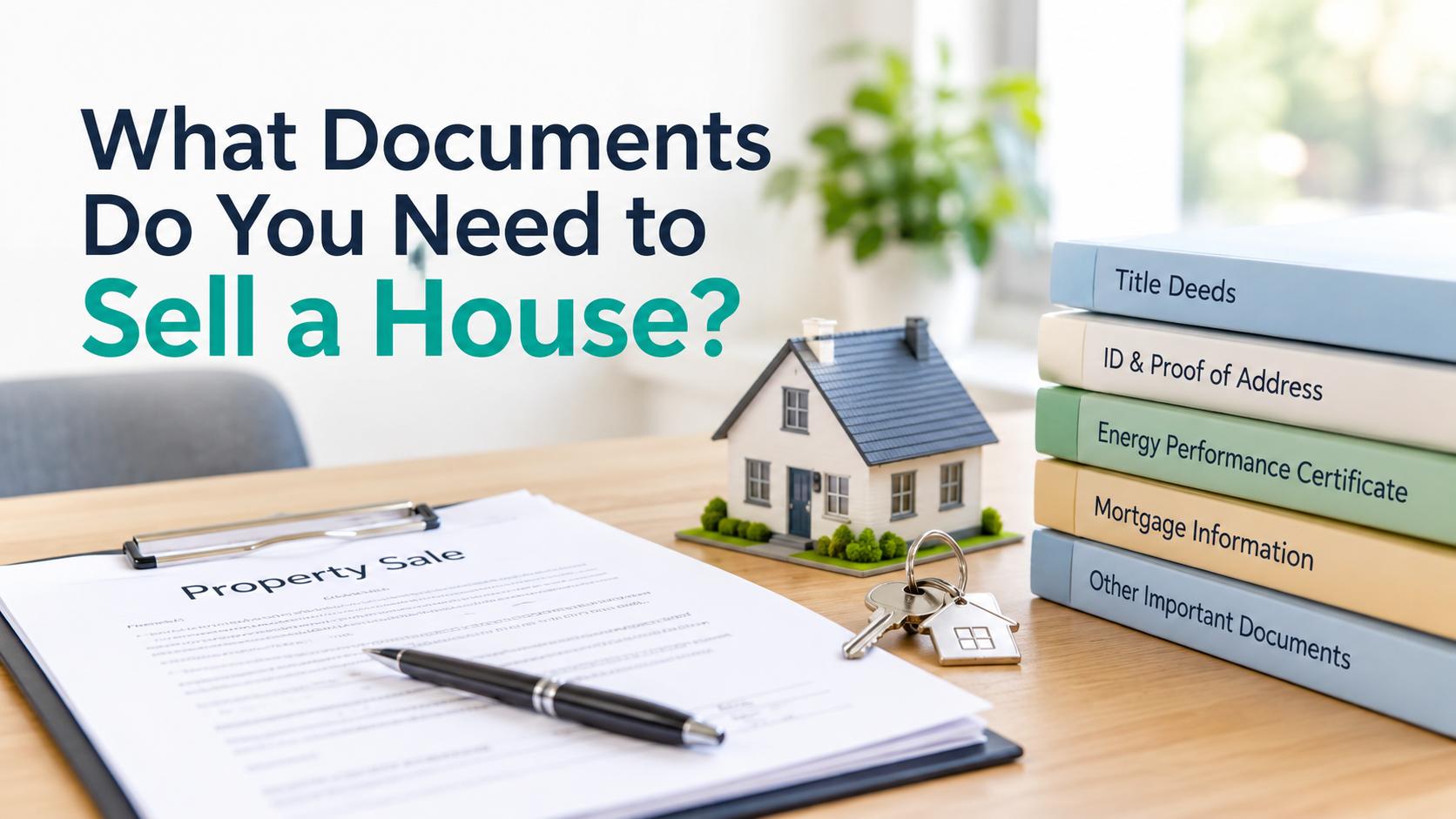
The documents needed to sell a house UK: a quick checklist
Here is the whole picture at a glance. Each item is explained below.
| Document | What it is | Who usually provides it |
|---|---|---|
| Proof of ID and address | Passport or driving licence, plus a recent bill or statement | You |
| Property deeds or title register | Proof that you own the property | You or your solicitor |
| EPC certificate | Energy rating for the property | A registered assessor |
| TA6 form | Property information form | You, with your solicitor’s help |
| TA10 form | Fittings and contents form | You |
| Leasehold papers | Lease, service charge and ground rent details | Freeholder or managing agent |
| Guarantees and certificates | Windows, boiler, electrics, building work | You, or the installer |
Proof of identity
Before they can act for you, solicitors and estate agents must confirm who you are. That means one form of photo ID, such as a passport or driving licence, and one proof of address, such as a bank statement or utility bill, usually dated within the last three months. If the property is in joint names, every owner needs to provide both. Have them scanned and ready on the day you instruct a solicitor.
Property deeds and proof of ownership
Your property deeds show that you own the home and have the right to sell it. In most cases you will not need to hunt through a drawer for a paper bundle. The majority of homes in England and Wales are registered with HM Land Registry, and your solicitor can download the official title register and plan for you.
If you want to look at it yourself, you can request an official copy online from HM Land Registry for a small fee, currently about £7 at the time of writing. Check the current price on GOV.UK before you order.
If your property is not registered. Around one in seven properties is still unregistered, usually homes that have stayed in one family for decades. Your solicitor will need the original paper deeds, or will help you trace them through a lender or old solicitor. Missing deeds can usually be reconstructed, but it adds time, so start early.
If you have a mortgage. Your lender holds a charge on the property. Your solicitor will request a redemption statement showing what you owe so the loan can be repaid from the sale proceeds on completion.
Your EPC certificate
An Energy Performance Certificate (EPC) rates how energy efficient your home is, from A (best) to G. In England and Wales you need a valid one before you can market a property for sale, and it lasts for ten years.
You may already have one. You can search the government’s EPC register by address, and it is free. If you do not, or yours has expired, book an accredited domestic energy assessor. Expect to pay roughly £35 to £150 plus VAT depending on the size of the property and where you are.
The TA6 form: Property Information Form
The TA6 is the form sellers dread, mostly because it is long. It is a standard Law Society questionnaire in which you tell the buyer what you know about the property. Typical topics include:
- boundaries and who is responsible for them
- any disputes with neighbours, or notices you have received
- alterations, extensions and any permissions that went with them
- guarantees, warranties and insurance claims
- flooding, Japanese knotweed and other issues that affect the property
Answer honestly and completely. If you are unsure, say so rather than guess, and ask your solicitor. A wrong or careless answer can lead to a claim after the sale, which is a far bigger problem than a slightly awkward form.
The TA10 form: Fittings and Contents Form
The TA10 is shorter and more friendly. It sets out what is included in the sale, what you are taking with you, and what you are happy to sell separately. Think curtains, light fittings, the shed and the washing machine.
Be specific. Vague wording is a common cause of last-minute arguments.
Leasehold documents
If you are selling a flat or any other leasehold property, you will need more. Typically this means:
- a copy of the lease, which you can obtain from HM Land Registry if you cannot find yours
- ground rent and service charge details, including recent demands and receipts
- buildings insurance information
- a leasehold information form, known as the TA7, and a management pack from the freeholder or managing agent
Managing agents often charge for the pack and can take weeks to produce it, so ask for it as soon as you decide to sell. If you are weighing up a short lease, a service charge dispute or something similar, our guide to selling a problem property explains your options.
Guarantees, certificates and building paperwork
These are the documents people most often cannot find, and buyers’ solicitors ask for them constantly.
- Window and door certificates. Replacement windows and doors fitted since 2002 should have a compliance certificate, such as FENSA or CERTASS.
- Boiler documents. The installation certificate, the latest service record and any warranty.
- Electrical paperwork. For notifiable electrical work carried out since 2005 in England, a Building Regulations compliance certificate. An electrical safety report is not a legal requirement for an owner-occupier sale, but a recent one reassures buyers.
- Extensions, loft conversions and conservatories. Planning permission documents where needed, plus a Building Regulations completion certificate.
- New-build and structural warranties. NHBC or similar policies, if the home is under ten years old.
Special situations
Some sales need extra paperwork on top of the standard list.
- Inherited property. The executor will need the grant of probate, or letters of administration if there is no will, plus a copy of the death certificate. Our page on selling an inherited home walks through the process.
- Tenanted property. Add the tenancy agreement, deposit protection details, a current gas safety record and an electrical safety report. See selling a tenanted property.
What if a document is missing?
It happens all the time, and it is rarely fatal. Here is the usual fix for each common gap:
- Lost deeds: request an official copy from HM Land Registry, or ask your solicitor.
- No window certificate: the installer may hold a copy, or the certification body may be able to supply one.
- No Building Regulations sign-off: apply to the local council for a regularisation certificate, or your solicitor may suggest indemnity insurance.
- No EPC: book an assessor. It is quick and inexpensive.
- Missing lease: apply to HM Land Registry or ask the managing agent.
What changes if you sell to a property buying company?
A conventional sale needs the full set of documents, because the buyer, their mortgage lender and their solicitor all have to be satisfied. A sale to a property buying company is usually lighter, because there is no listing or mortgage valuation, so you can ask for an offer before you have found a single certificate.
At Next Day Offer, you only need to give us the address and a few details about the property to get a written offer the next working day. You do not need to commission an EPC or hunt for guarantees first. Your solicitor will still need your ID and ownership details to complete, and our How it works page lists each step. You can also see how our price compares with an estate agent sale, including costs, on our What we pay page.
Frequently asked questions
Do I need a solicitor to sell my house?
Yes, in practice. The legal transfer must be done by a solicitor or licensed conveyancer, and they will request most of these documents for you.
Can I sell without an EPC?
You need a valid EPC before you market a property for sale. A buyer who purchases directly may be in a different position, so check with your solicitor, but an EPC is cheap and quick to arrange.
The short version
Start with ID, your title details, an EPC and the TA6 and TA10 forms. Add leasehold papers and building certificates if they apply, and chase anything you cannot find on day one. If you want to see how paperwork and timing fit into the bigger picture, read our complete guide to selling your house fast in East Anglia.
If you would rather skip most of it, tell us about your home in about three minutes and we will send a written offer the next working day, with no obligation. Get my offer, or hold an offer already? Ask for a second opinion.
Next Day Offer buys houses and flats across Norfolk, Suffolk and Cambridgeshire. Our offers are below open market value. Nothing in this guide is legal or financial advice, so speak to a solicitor about your own sale.